Discover Why Mulching Trees Boosts Health in Volusia County
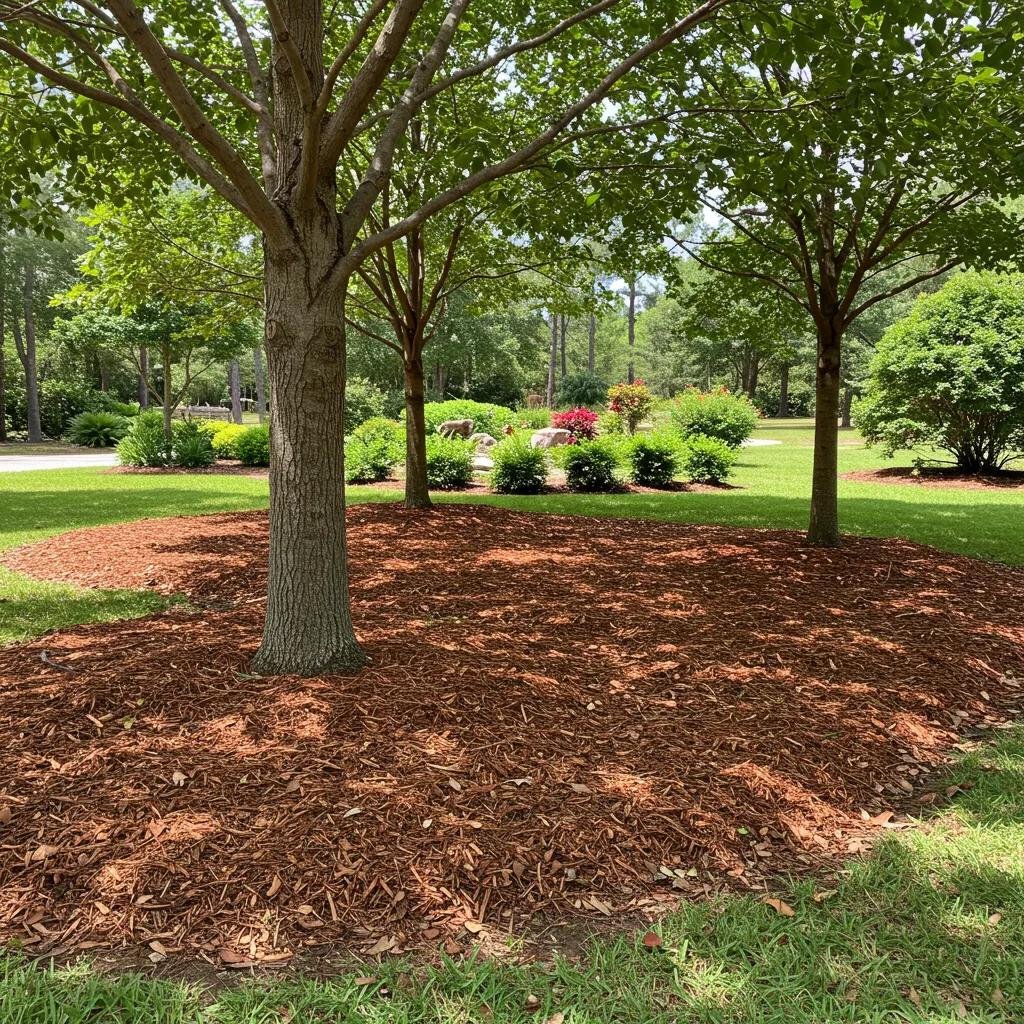
Benefits of Mulching Trees in Volusia County: Improve Tree Health and Landscape Beauty
Mulching is the intentional layer of organic or inorganic material placed around a tree’s root zone to conserve soil moisture, suppress weeds, regulate temperature, and improve soil structure—especially important in Volusia County’s hot, humid, sandy-soil environment. This guide explains why mulching matters for local trees, how professional services convert debris into useful mulch, which materials work best in Florida, and exact application techniques that protect roots and improve landscape value. Property owners often face rapid moisture loss, nutrient-poor sand, and erosion after heavy rains; proper mulching addresses these challenges by retaining water, adding organic matter, and stabilizing soil. Over the next sections you will find evidence-based benefits tied to Volusia’s climate, a practical review of professional mulching services, a comparison table of mulch types suited to local trees, numeric guidance on depth and ring size, and actionable ROI and cost guidance. Throughout the article we use local context, research-backed mechanisms, and operational options so you can make informed decisions that enhance tree health and curb appeal in Volusia County.
Why Is Mulching Essential for Trees in Volusia County?
Mulching is essential in Volusia County because it directly addresses the region’s sandy soils, high summer evapotranspiration, and periodic heavy rainfall by improving moisture retention, moderating soil temperature, and reducing surface erosion. The mechanism is simple: mulches form a porous insulating layer that reduces direct sunlight on soil, slows evaporation, and allows organic matter to gradually incorporate into the sand, improving water- and nutrient-holding capacity. For tree health, this translates into stronger root systems, reduced drought stress during hot months, and less competition from weeds. These ecological benefits lead naturally into specific functional advantages like moisture retention and erosion control, which are explored in the following subsections.
How Does Mulch Help Retain Moisture in Florida’s Hot Climate?
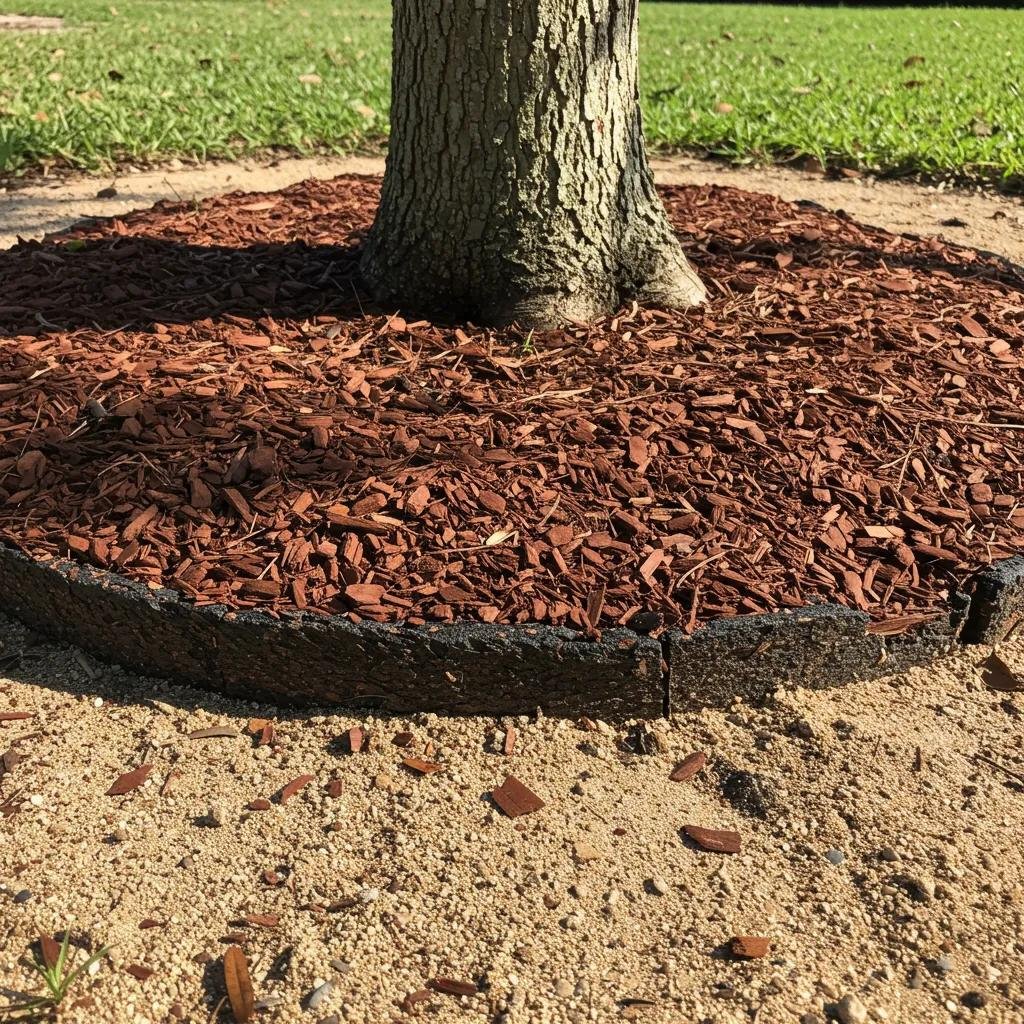
Mulch retains moisture by shading the soil surface and limiting direct solar heating, which reduces evaporation and keeps root-zone moisture available longer after rainfall or irrigation. In Volusia County’s hot, humid climate, organic mulches such as wood chips and pine bark slow water loss and encourage microbial activity that increases soil water-holding capacity over time. For practical use, homeowners should aim to maintain consistent mulch cover and reapply organic mulch annually to replenish decomposed material and sustain moisture benefits. Understanding moisture management through mulching leads directly to how mulch also suppresses weed growth and conserves resources.
Mulching for Sustainable Agriculture: Soil Temperature and Water Conservation
This review paper extensively discusses the benefits of organic or synthetic mulches for regulating soil temperature, or reducing crop irrigation requirements. The application of organic mulches to soil improved soil
Mulching as a sustainable water and soil saving practice in agriculture: A review, HS El-Beltagi, 2022
In What Ways Does Mulching Suppress Weeds Naturally?
Mulch suppresses weeds primarily by blocking light from reaching weed seeds and by creating an area less hospitable to seed germination, which reduces the need for chemical control. Dense organic layers of wood chips or shredded leaves prevent many annual weeds from sprouting while allowing beneficial soil organisms to thrive and outcompete invasive seedlings. Recommended practice is to maintain a 2–4 inch layer that is even and not piled against the trunk; this depth maximizes suppression without impairing root oxygen. Effective weed control through mulch connects to temperature moderation and overall root protection explained next.
Wood Mulch Benefits: Tree Growth, Soil Moisture, and Weed Control
The use of wood byproducts as horticultural mulch has increased in the last decade as the horticulture industries and landscape architects have raised the public’s awareness of the aesthetic and maintenance benefits to be gained from mulch use. The objectives of this experiment were to evaluate the effect that two types (chipped pine and shredded hardwood chips) and three depths (7.5 cm, 15 cm, and 25 cm) of mulch and an unmulched control would have upon: 1) oxygen percent, moisture percent and soil temperatures; 2) growth of two thin barked trees (Pinus strobusandQuercus palustris); 3) establishment of weed populations; and 4) potential change in certain soil parameters (pH, nitrates, and soluble salts). After two years, no differences were found between mulch types, but soil oxygen levels declined (non-significantly), temperatures declined, and moisture levels increased with increasing depth of mulch. Weed density and diversity also declined significantly with increasin
The effect of wood mulch type and depth on weed and tree growth and certain soil parameters, DA Rakow, 1995
How Does Mulch Regulate Soil Temperature for Tree Roots?
Mulch acts as an insulating blanket that reduces soil temperature extremes—cooling the root zone during Florida’s intense summer heat and providing mild insulation during cooler months—thereby reducing thermal stress on roots. This thermal regulation improves root metabolic function and helps trees withstand heatwaves and sudden weather swings that can impair water uptake. Choosing organic mulches that neither compact nor retain excessive heat (avoid dark, dense rock in root zones) is important to preserve the insulating effect. The temperature benefits described here also support long-term soil improvement through organic matter addition, a topic addressed next.
What Role Does Mulching Play in Enriching Volusia County’s Sandy Soil?
In sandy Volusia soils, organic mulch gradually decomposes and contributes humus and particulate organic matter that enhance cation exchange capacity, nutrient retention, and moisture-holding ability. The decomposition process feeds soil microbes, which in turn release nutrients in plant-available forms and improve aggregate stability, slowly transforming loose sand into a more resilient rooting medium. Expect measurable soil structure improvements over multiple seasons with consistent mulch application, while pairing mulching with other soil-building practices accelerates benefits. Improved soil structure also reduces erosion risk during heavy rainfall events, which is discussed in the next subsection.
Native Mulch Enhances Seedling Establishment in Sandy Soils
native-sourced mulch can improve seedling function and establishment in postmine Mediterranean-type sandy soils. The practical application of an amendment for postmine restoration
Increasing soil water retention with native‐sourced mulch improves seedling establishment in postmine Mediterranean sandy soils, KW Dixon, 2013
How Does Mulching Prevent Soil Erosion During Heavy Rainfall?
Mulch reduces surface runoff by creating a permeable layer that absorbs raindrop impact and slows water flow, allowing more infiltration on flat and sloped sites common in Volusia County. For coastal lots and properties with drainage concerns, evenly distributed organic mulch protects exposed topsoil and decreases sediment transport during storms. On slopes, professionals recommend anchoring mulch with light biodegradable netting or combining mulching with groundcover plantings for added stability. Reducing erosion through mulching naturally enhances landscape aesthetics and property resilience, which we cover in the following subsection.
How Does Mulching Enhance Landscape Aesthetics and Property Value?
A uniform, well-maintained mulch layer immediately enhances curb appeal by defining planting beds, creating visual contrast, and signaling a cared-for landscape, which can positively influence buyer perception and perceived property value. Beyond looks, the reduced maintenance, fewer weeds, and healthier trees translate to lower ongoing landscape costs and improved longevity of ornamental plantings. Homeowners should balance aesthetic goals with ecological ones—choose organic materials that complement landscape style while supporting tree health. Aesthetic improvements via mulching often prompt homeowners to consider professional services for consistent installation and maintenance, which is the focus of the next H2 section.
What Professional Mulching Services Are Available in Volusia County?
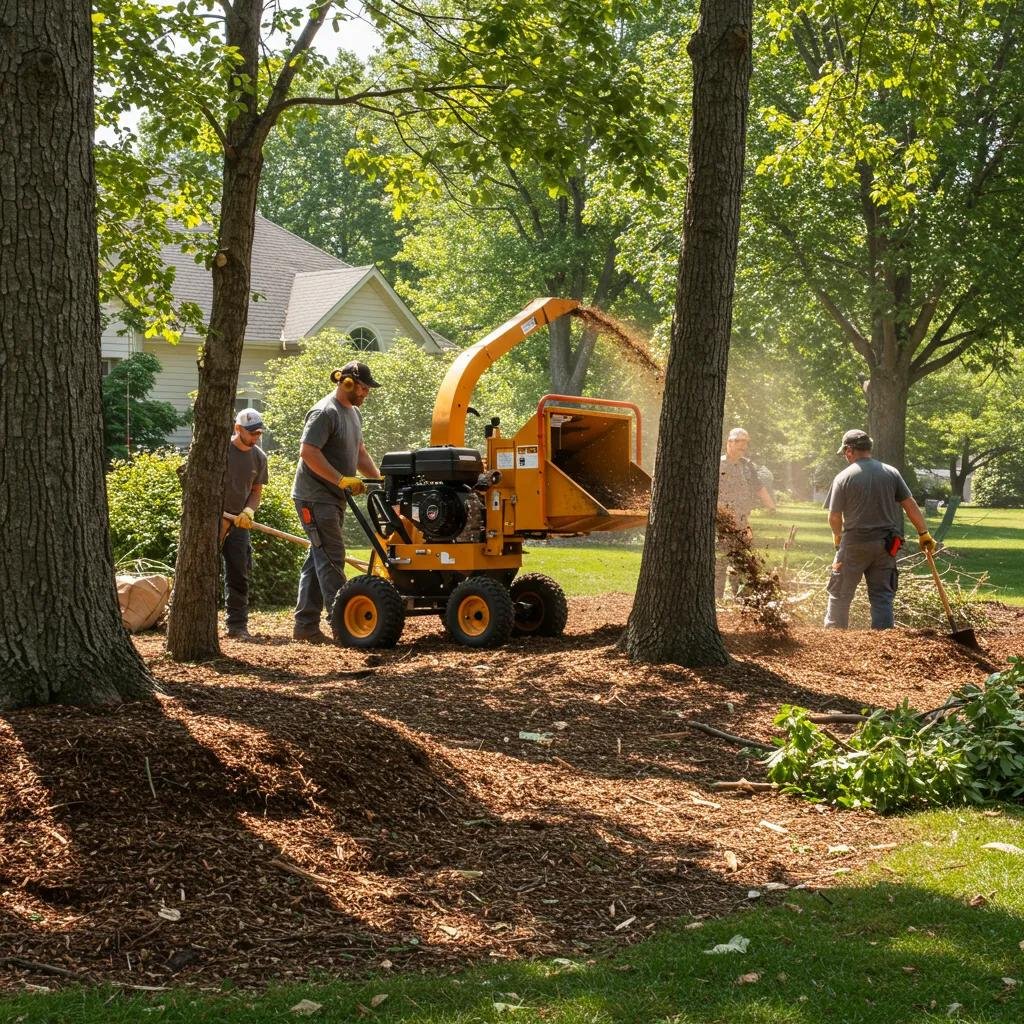
Professional mulching services in Volusia County typically include on-site wood chipping to convert debris into usable mulch, expert installation of mulch rings and bed outlines, and forestry mulching for larger land-clearing projects—each service tailored to site access, tree species, and landscape goals. Professionals use specialized machinery to control chip size and distribution, ensuring material is suitable for tree beds and does not compact or smother roots. Hiring a professional also reduces homeowner risk of over-mulching and ensures proper protection of root flares and trunk collars. Below are common service workflows and best-practice techniques that illustrate why pros often produce better long-term outcomes than DIY approaches.
Mulching-related services commonly offered by local providers include:
- On-site wood chipping and debris management that converts cut material to mulch at the job site.
- Professional mulch installation that constructs proper mulch rings and protects trunk flare while maintaining recommended depths.
- Forestry mulching for land clearing that grinds vegetation into ground cover, improving erosion control and site rehabilitation.
These services reduce waste, protect trees, and improve landscape resilience; the next subsections describe how on-site chipping works and how professionals install mulch correctly.
How Does On-Site Wood Chipping Create Beneficial Mulch?
On-site wood chipping converts pruned branches and tree removals into wood chip mulch, which reduces hauling costs and provides an immediate source of organic material for beds and erosion control. The chipping process produces a range of chip sizes; for tree beds, medium to coarse chips that break down steadily are preferred to maintain porosity and moisture retention. Operators often allow chips to cure briefly before application to moderate nitrogen immobilization during decomposition, and seasoned chips are spread at recommended depths for tree health. This debris-to-mulch workflow supports sustainability and cost-efficiency, and it naturally leads to professional installation techniques that avoid common homeowner mistakes.
What Are Expert Mulch Installation Techniques for Optimal Tree Health?
Expert installation begins with clearing grass from the intended ring, identifying and preserving the root flare, and laying mulch to a uniform 2–4 inch depth while keeping material 3 inches away from the trunk to prevent moisture-trapped decay. Professionals shape mulch in a broad, flat ring—or out to the dripline when practical—to maximize root-zone coverage without creating a “volcano” against the trunk that can cause girdling and rot. They also select appropriate mulch particle sizes and avoid compaction by not layering heavy, dense materials directly over roots. These techniques minimize disease risk and set the stage for long-term vigor, which connects to forestry mulching uses for larger sites.
How Does Forestry Mulching Support Land Clearing and Soil Improvement?
Forestry mulching uses large-capacity mulching machines to grind woody vegetation and understory into a protective organic layer that suppresses regrowth, reduces erosion, and slowly enriches the soil surface. Unlike traditional clearing that removes organic matter, forestry mulching leaves groundcover in place, accelerating soil cover recovery and creating mulch that stabilizes slopes and habitat corridors. Typical cost drivers include acreage, vegetation density, and machine size, but the environmental payoff comes from on-site organic recycling and reduced debris hauling. When combined with targeted planting and erosion-control measures, forestry mulching provides a rehabilitation pathway for degraded or overgrown parcels.
Which Types of Mulch Are Best Suited for Volusia County Trees?
Choosing the right mulch depends on desired longevity, nutrient contribution, and heat retention properties; organic wood-based mulches are generally the best fit for Volusia County trees because they improve sandy soils while moderating moisture and temperature. Organic materials such as pine bark, hardwood chips, and shredded leaves decompose at different rates, releasing nutrients and building soil structure over seasons. Inorganic options like rock or rubber sometimes appear in landscapes, but they can retain heat and inhibit organic processes when used in tree beds. The table below compares common mulch types by durability, nutrient contribution, recommended depth, and best use-cases to help select the most suitable material.
| Mulch Type | Durability | Nutrient Contribution | Recommended Use |
|---|---|---|---|
| Organic wood chip | Medium | Moderate, slow-release | General tree beds and root zones |
| Pine bark mulch | Medium-high | Adds acidity and humus | Acid-preferring ornamentals and long-lasting cover |
| Shredded leaves | Low | High microbial support, quick breakdown | Soil-building and seasonal topdressing |
| Hardwood mulch | High | Moderate to high as it decomposes | Mature tree beds and erosion-control areas |
| Rock/inorganic | Very high | None; may increase heat | Pathways and non-tree beds only |
This comparison shows that organic mulches are preferable for tree health in sandy Volusia soils because they add organic matter and support water retention. The following H3 subsections explain benefits and inorganic trade-offs in more depth.
What Are the Benefits of Organic Mulches Like Pine Bark and Wood Chips?
Organic mulches gradually release nutrients, improve soil texture, and stimulate microbial communities that enhance nutrient cycling and water retention in sandy soils common to Volusia County. Pine bark offers longevity and slow decomposition suited to long-term beds, while mixed wood chips and shredded leaves decompose faster and are excellent for active soil building. Reapplication intervals typically range from 12–24 months depending on material and decomposition rate, with a lighter refresh rather than full replacement often sufficient. Choosing organic mulch supports both immediate moisture conservation and longer-term soil improvement that benefits tree health across seasons.
When Are Inorganic Mulches Appropriate for Florida Landscapes?
Inorganic mulches such as decorative rock or rubber are appropriate in non-rooted areas like walkways, mulch-free ornamental islands, or heavy-traffic pathways where longevity and low maintenance are priorities. However, rock in tree beds can increase soil temperatures, reduce organic matter accrual, and hinder water infiltration—issues that are especially pronounced in Florida’s climate. Use inorganic materials sparingly in root zones, and pair them with design elements that prevent heat stress and support root aeration. Understanding these trade-offs helps homeowners prioritize organic options for tree health while reserving inorganic materials for practical landscape use-cases.
How Much Mulch Should Be Applied Around Trees for Best Results?
The recommended mulch depth for most trees is 2–4 inches, keeping mulch at least 3 inches away from the trunk to prevent moisture trapping and bark decay; this numeric guidance is optimized for both tree health and pest/disease prevention. Ring size should generally extend toward the dripline when possible, but smaller, practical rings of 2–3 feet are acceptable for newly planted specimens. Over-mulching poses risks such as root suffocation, trunk rot, and rodent sheltering, so corrective thinning and aeration are important remediation steps. The table below offers quick reference dimensions by tree size and associated risks to aid homeowners in applying the correct quantities.
| Tree Size | Recommended Ring Radius | Recommended Depth | Risk of Over-Mulching |
|---|---|---|---|
| Small (young) | 2–4 feet | 2–3 inches | Root crowding if deeper than 3 inches |
| Medium (mature yard tree) | 4–8 feet or to dripline | 2–4 inches | Girdling roots if piled at trunk |
| Large (mature/landscape) | To dripline when practical | 2–4 inches | Trunk rot and pest habitat if >4 inches |
This quick reference clarifies numeric targets for homeowners; the next subsections detail measurement tips and remediation steps for common over-mulching issues.
What Is the Proper Mulch Ring Size and Depth for Tree Health?
A proper mulch ring is a shallow donut-shaped layer 2–4 inches deep that covers as much of the root zone as practical; for small trees a 2–4 foot radius is common, while mature trees benefit from mulch extended toward the dripline where feasible. The ring should be flat rather than piled against the trunk; keep mulch pulled back 3 inches from the bark to allow airflow and reduce decay risk. Simple measuring tips include using a tape to mark radius from trunk and visual inspection to ensure consistent depth across the ring. Correct ring construction protects the root flare and reduces maintenance costs, while incorrect sizing leads to problems discussed next.
What Are the Risks of Over-Mulching and How to Avoid Them?
Over-mulching—creating a mulch volcano or applying layers thicker than 4 inches—can lead to root suffocation, trunk rot, and increased pest and rodent activity that damage cambial tissue. Signs of over-mulching include moisture-laden mulch against the trunk, depressed root flare visibility, and slow canopy growth or dieback; correction involves carefully removing excess mulch, exposing the root flare, and restoring a flat shallow layer. Homeowners uncomfortable with remediation should consult a professional to avoid root injury during removal. Preventative practice—consistent maintenance and proper initial installation—keeps trees healthy and reduces the need for corrective interventions.
What Are the Frequently Asked Questions About Mulching Trees in Volusia County?
This FAQ-style section answers common homeowner questions with concise, evidence-ready responses designed for quick comprehension and snippet optimization. Each reply highlights practical, local guidance and cites best-practice outcomes for tree health in sandy, humid Florida conditions. The answers address benefits beyond aesthetics, recommended types of mulch for Florida, expected growth and longevity impacts, and how mulch can protect trees from equipment damage.
How Does Mulching Benefit Trees Beyond Aesthetics?
Mulching benefits trees by conserving soil moisture, enhancing nutrient availability through decomposition, insulating roots against temperature extremes, and reducing root competition from weeds—all of which support physiological growth and stress resilience. These functional improvements translate into healthier canopies, better establishment for new plantings, and lower long-term maintenance needs. Understanding these mechanisms helps homeowners prioritize mulching as a core tree-care practice rather than a purely decorative task. This perspective naturally leads to choosing materials tailored to Florida’s climate and soil.
What Types of Mulch Are Recommended for Florida’s Climate?
For Florida’s sandy, warm climate, recommended mulches include pine bark, hardwood chips, and shredded leaves because they balance moisture retention with gradual organic matter addition while supporting microbial activity. Avoid using dark, heat-absorbing rock in tree beds and limit rubber mulches where root health is a priority. Selecting local organic materials also reduces transportation impacts and provides regional suitability for decomposition rates and nutrient cycling. Choosing appropriate mulch sets the stage for measurable growth and longevity benefits described next.
Can Mulching Improve Tree Growth and Longevity?
Yes, properly applied mulch consistently improves tree growth metrics and longevity by reducing water stress, improving soil conditions, and decreasing mechanical damage from equipment, which collectively reduce mortality risks and support sustained vigor. Research and practical experience indicate mulched trees establish faster and require fewer corrective treatments over time, with benefits accumulating when mulch is part of an integrated maintenance plan. Consequently, long-term savings in watering and treatment costs partially offset installation expense and contribute to property value. After establishing these benefits, consider cost and ROI implications in the next H2.
How Does Mulching Help Protect Trees from Equipment Damage?
Mulch rings create visible, physical no-mow zones that deter lawn mowers and trimmers from approaching the trunk and damaging bark or compacting soil, thereby reducing risk of mechanical injury that can invite pests and decay. A clear mulch boundary communicates maintenance limits to workers and makes it easier to enforce protective practices during landscape or construction tasks. Using mulch combined with signage or edging further reduces accidental damage during yard work. Protecting trees from equipment damage is a practical, low-cost prevention measure that extends tree life and reduces future service needs.
How Can Property Owners in Volusia County Maximize the ROI of Mulching?
Maximizing ROI from mulching involves balancing upfront installation or forestry mulching costs against long-term savings from reduced irrigation, lower pesticide needs, fewer removals, and improved property aesthetics that influence resale value. Cost drivers include job scale, access, debris volume, and whether on-site chipping can be used to supply mulch, which lowers material costs. Strategic application—prioritizing high-value trees and erosion-prone areas, combining mulch with targeted irrigation adjustments, and scheduling periodic top-dressing—delivers measurable savings over several seasons. The following subsections provide cost ranges, value rationale, and illustrative local scenarios to guide decision-making.
What Are Typical Costs for Professional Mulching Services in Volusia?
Typical professional costs vary: small-scale mulch installation for individual trees is usually priced per tree or job, while forestry mulching and large acreage land clearing are priced per acre and depend on vegetation density, accessibility, and machine size. On-site chipping capability can reduce material costs by converting debris into usable mulch, making projects more economical than hauling and purchasing new mulch. Homeowners should request itemized estimates that clarify labor, equipment, and disposal or recycling steps; accurate assessment enables direct comparison of bids. Understanding cost components empowers better budget decisions and clarifies expected ROI over time.
How Does Mulching Contribute to Long-Term Tree Health and Property Value?
Mulching contributes to long-term tree health by reducing drought stress, lowering pest and disease incidence from trunk injury, and improving root-zone conditions that support growth and reduce future removal or major pruning needs. These health outcomes translate into lower lifetime care costs for owners and heightened curb appeal that can positively influence buyer perceptions and resale value. When mulching is applied strategically across a landscape, the compounding benefits—reduced irrigation needs, less chemical intervention, and healthier trees—create a compelling financial case for the initial investment. This financial rationale often convinces property owners to include mulching in their regular landscape maintenance plans.
What Local Case Studies Demonstrate Successful Mulching Results?
Illustrative local scenarios show measurable outcomes: a residential property applying regular wood-chip mulch around mature oaks saw reduced supplemental irrigation needs and improved leaf retention during dry months, while a municipal right-of-way project using forestry mulching stabilized slopes and reduced erosion after heavy storms. These scenarios demonstrate how mulch application, when combined with proper depth and ring sizing, leads to quantifiable benefits such as fewer irrigation cycles and reduced weed control costs. For realistic planning, treat these examples as templates and request site-specific estimates to model expected savings for your property.
How Does Volusia Bobcat & Tree Service Support Mulching Needs in Volusia County?
Volusia Bobcat & Tree Service is a licensed and insured provider offering comprehensive tree care across Volusia, Seminole, Flagler, and Orange Counties, with core offerings that include tree removal, tree trimming, stump grinding, land clearing, and 24/7 emergency services. The company integrates on-site wood chipping and debris management as a value-added capability, converting removed material into usable mulch to reduce waste and supply organic material for installation. Fast response, affordable pricing, and a focus on precision tree care and customer satisfaction are emphasized as operational priorities that help property owners get practical mulching solutions that align with local soil and climate needs.
What Makes Volusia Bobcat & Tree Service a Trusted Mulching Expert?
The company’s operational advantage lies in combining professional tree services with on-site wood chipping, enabling a debris-to-mulch workflow that lowers material costs and accelerates project timelines while maintaining licensed and insured practices for homeowner protection. Their service area across Volusia, Seminole, Flagler, and Orange Counties allows them to match equipment and techniques to local site conditions, from small residential yards to larger land-clearing projects. Emphasizing fast response and precision care, the provider helps ensure mulch installations are executed to avoid over-mulching and protect trunk flare. These capabilities make them a practical partner when professional mulching is warranted.
How Does 24/7 Emergency Service Enhance Mulching and Tree Care?
Round-the-clock emergency response supports rapid debris removal and chipping after storms, reducing hazards from downed limbs and enabling faster application of erosion-control mulches to stabilize affected areas. Quick intervention limits prolonged exposure of roots and soils to erosion and helps salvage trees that can be stabilized with immediate cleanup and protective mulching. Emergency capabilities also reduce the window for secondary damage from pests or disease that exploit storm-injured trees. This operational readiness connects emergency response with long-term landscape resilience and quicker project recovery.
How Can Customers Get a Free Estimate for Mulching Services?
Property owners interested in a free estimate are encouraged to request a site assessment and provide photos and access details through the company’s online contact options or its Google Business Profile, enabling accurate scope evaluation and transparent pricing. Including information about property access, tree locations, and debris volume helps the estimator provide a targeted proposal that clarifies whether on-site chipping and forestry mulching are cost-effective for the project. Clear next steps and an itemized estimate support homeowner decision-making and align service expectations with desired outcomes.
- Mulch selection and application are tools that protect trees and improve long-term landscape value.
- Professional services with on-site chipping reduce waste and supply usable mulch cost-effectively.
- Proper depth and ring sizing prevent common problems like trunk rot and root suffocation.
These key points summarize how mulching, when done correctly and supported by professional capability where needed, produces both ecological and financial benefits for Volusia County properties.